
Application
The electric flow-through water heater is designed to provide hot water for heating systems in food processing and other industrial equipment. The heated water circulates through a vessel’s heating jacket, transferring heat indirectly to the product inside.
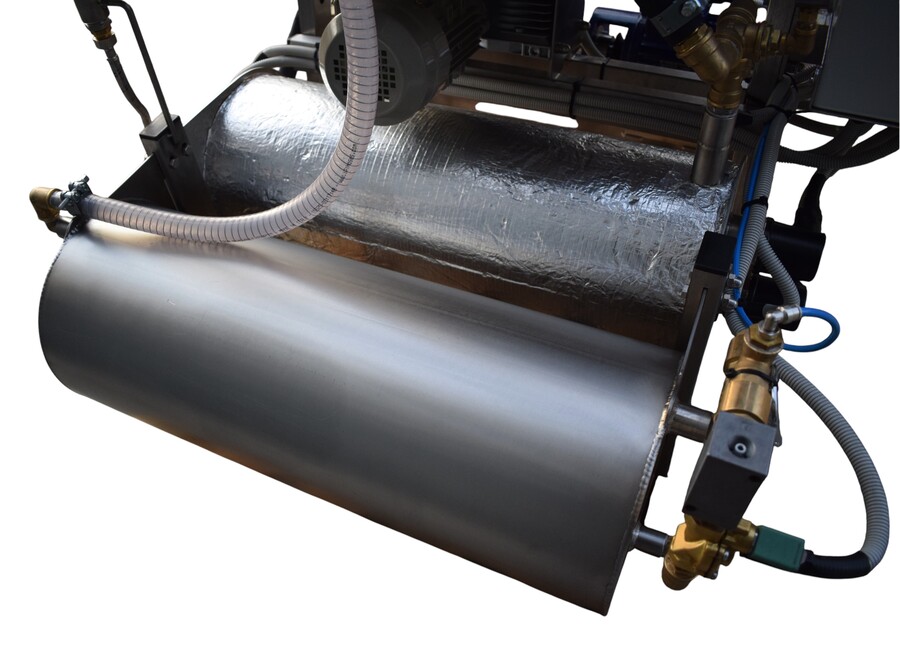
It can be used with jacketed cooking kettles, vacuum evaporators, reactors, mixers, pasteurizers and other compatible processing vessels. Typical applications include cooking, heating, blanching and concentrating food products, as well as maintaining the required processing temperature during production.
The heater is suitable for systems in which water serves as the heat transfer medium, most commonly supplied into a thermal jacket (duplicator). Its compatibility with a particular vessel depends on the jacket design, required heating capacity, operating pressure and circulation requirements.
Operating principle
Water passes through the water heater, where electric heating elements raise its temperature to the set value. The heated water is then circulated through the connected equipment’s heating jacket, transferring heat through the vessel wall to the product.
Continuous circulation helps distribute heat throughout the heating circuit. The required circulation pump must be selected according to the volume and hydraulic resistance of the jacket, the operating temperature and the requirements of the complete system.
The water temperature can be adjusted using the heater’s control system. Two-stage heating power control allows the heating output to be adjusted in steps, while integrated safety functions protect the heating elements against overheating and operation without sufficient water.
Design and construction
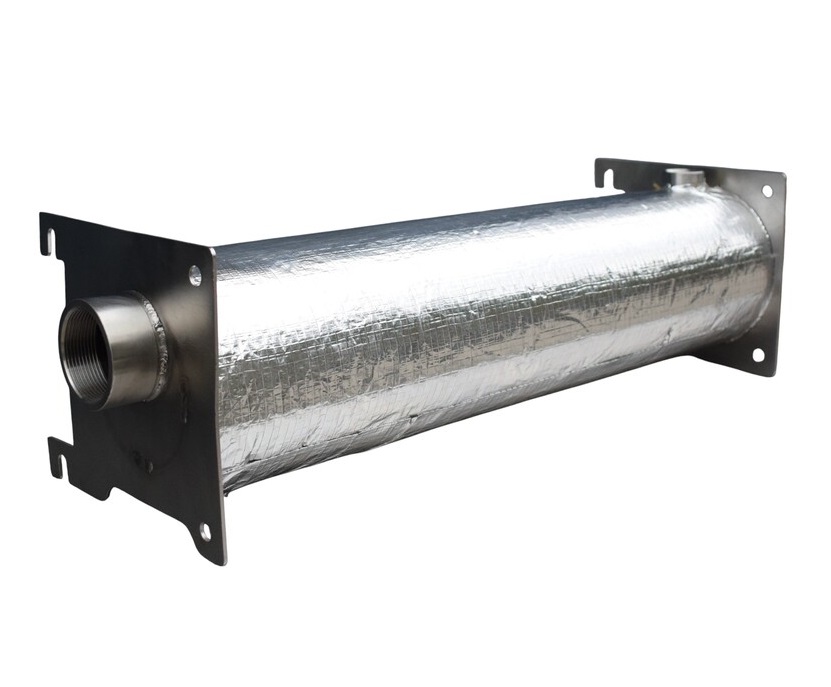
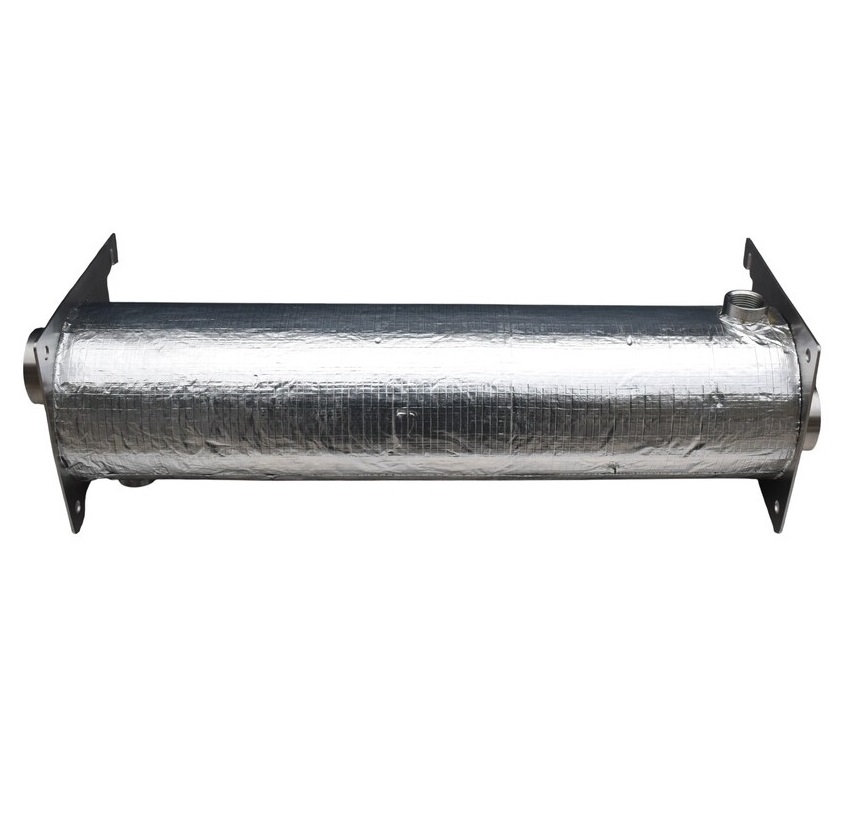
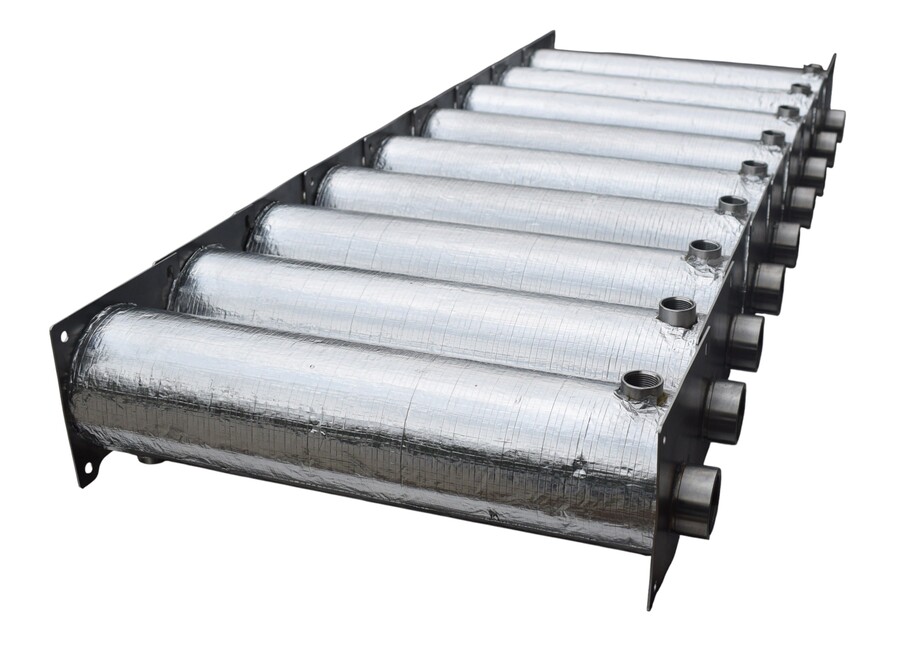
The basic unit consists of a flow-through heating section with electric heating elements, a protective casing, temperature controls and safety systems, and an independent control panel. The insulated casing helps reduce heat loss during operation.
The design allows the electric flow-through water heater to be incorporated into a suitable external heating circuit. Depending on the installation, mounting brackets may be used to position the unit close to the equipment being heated.
Selecting the heating capacity
The required heating capacity depends on the volume and design of the connected vessel, the product being processed, the desired heating time, the initial and target temperatures, and heat losses from the system.
Available heating capacities are 2, 3, 6, 9, 12, 24, 36, 48 and 72 kW. As an example, 9–12 kW water heaters are commonly used to supply hot water to a thermal jacket (duplicator) to heat processing equipment with a capacity of around 100 litres, such as our electric cooking kettles with a heating jacket and vacuum evaporators. The required heating capacity depends on the vessel design, product, target temperature and desired heating time.
For installation, the circulation pump and other components must be selected to suit the chosen heater and connected equipment. An expansion tank and high-temperature hoses may also be required, depending on the system design.
Optional accessories
- Circulation pump — circulates the heated water through the heating jacket and return line.
- Expansion tank — accommodates changes in water volume as its temperature rises, where required by the system design.
- High-temperature hoses — connect the heater to compatible equipment where flexible connections are appropriate.
The pump and other accessories should be selected according to the system’s operating temperature, flow requirements, pressure rating and connection specifications.


Reviews
There are no reviews yet.